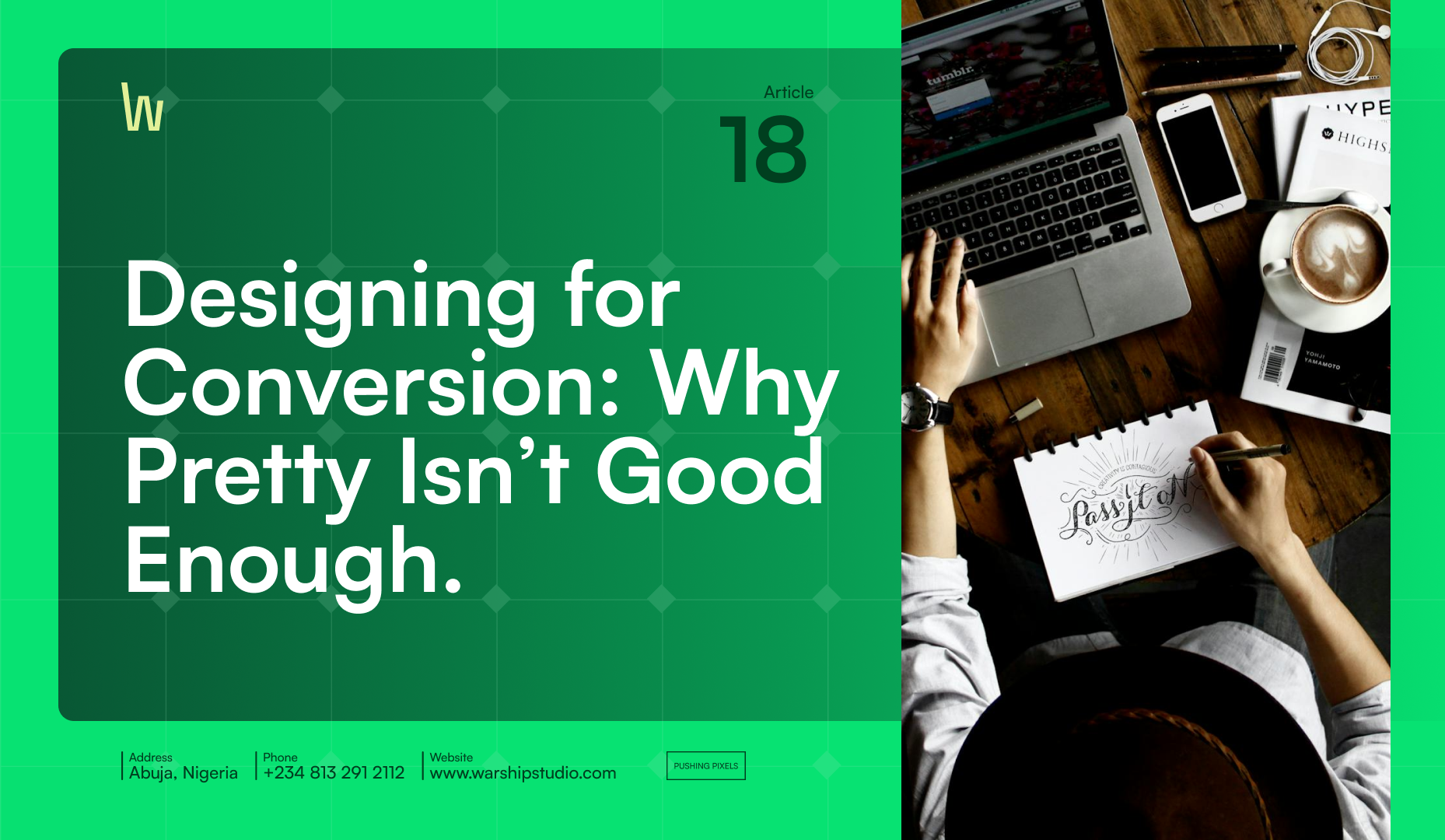
Designing for Conversion: Why Pretty Isn’t Enough
We all love a pretty website. Crisp images, elegant fonts, fresh layouts will make us stop, stare, and maybe even admire the creativity behind them. But looking good isn’t the same as working well. We need to learn the art of designing for conversion.
A site can be visually stunning and still fail to convert visitors into customers. And in business, conversions keep the lights on.
So, what’s missing? The answer is strategy. Specifically, designing for conversion: a blend of aesthetics, psychology, and interaction that guides users to act. Let’s break down why “pretty” alone doesn’t cut it, and what actually makes design convert.
The Psychology of Decision-Making
When a user lands on your website, they’re not just looking at your design, their brain is working overtime to make sense of it. Within a few seconds, visitors form an impression of your site. That impression decides whether they’ll explore further or leave.
The good part is, you can guide their decisions. This is where visual hierarchy comes in. It’s the principle of arranging elements so that the most important things stand out.
An example is Amazon’s “Add to Cart” button – bright yellow, surrounded by white space, and strategically placed under product details. Even if you skim the page, your eyes always land there. It’s a deliberate design that drives action.
Pretty layouts may look balanced, but without hierarchy, they confuse users. And confusion kills conversions.
Why Motion Matters More Than You Think
Static visuals are nice, but motion is magnetic. Humans are hardwired to notice movement as it signals importance. That’s why adding motion to your design is an important conversion tool.
Motion builds trust.
Online shoppers can’t hold, touch, or test your product. Motion bridges that gap.
- A 360° spin of a sneaker shows every angle, making it feel real.
- A zoom animation on a handbag highlights stitching and texture, reassuring quality.
Nike, Sephora, and IKEA all use motion in product pages to make online shopping feel tangible.
Motion creates urgency.
Have you ever seen a countdown timer ticking down on a sale page? Or a “2 left in stock” message that pulses? That’s motion triggering fear of missing out (FOMO). It tells your brain: act now, or lose out.
Most shopping sites are notorious for this. Their notifications may not be “pretty,” but they work because they push people to make decisions quickly.
UX Psychology: Small Choices, Big Impact
Good design is about reducing friction. Every click, scroll, or pause matters because it either reassures users or frustrates them.
Here’s how psychology comes into play:
- Contrast – Direction. Make your call-to-action button a contrasting color so it jumps out from the page.
- White space – Focus. More breathing room around important elements helps the brain lock onto them faster.
- Consistency – Trust. If your buttons look and behave the same across your site, people feel in control.
Airbnb nails conversion-focused UX. Their clean layouts guide you step by step to pick your location, choose dates, browse listings. Animations like hover effects on listings or dynamic map updates don’t just look nice; they reassure you that every action is working. That sense of control makes people confident enough to book. The Importance of UX cannot be overemphasized.
Interaction Equals Reassurance
People don’t buy when they’re unsure. They need feedback that confirms they’re making the right moves. That’s why micro-animations are so powerful.
- A button that slightly enlarges when you hover.
- A progress bar that fills up as you complete a form.
- A subtle checkmark animation after a successful payment.
These may seem small, but they’re massive trust builders. They tell users: yes, your action worked. Keep going.
Brands like Duolingo and Slack are masters of this. Their use of micro-animations makes navigation playful but also reassuring. You feel in control, which leads to higher completion rates (and conversions).
Why “Pretty” Isn’t the Goal
he blunt truth is that pretty doesn’t always perform. In fact, overly pretty designs can sometimes backfire. Fancy typography may look chic but be unreadable. A creative layout might win awards but confuse customers.
The most successful brands balance aesthetics with strategy. Their designs are pleasing and purposeful.
- Coca-Cola: Their red isn’t just bold; it’s engineered to trigger excitement and warmth.
- Dropbox: Their illustrations aren’t random doodles; they’re simple visuals designed to reduce complexity and make cloud storage approachable.
- Google: The homepage is famously plain, but its usability is legendary. No distractions, just a search bar.
These brands prove that it’s not about making things pretty. It’s about making them work.
Designing for Conversion: What Really Matters
If you want your design to convert, here’s what to focus on:
- Clarity: If users can’t find your CTA in 3 seconds, you’ve lost them.
- Motion with meaning: Every animation should guide, reassure, or convince, not distract.
- Emotional triggers: Colors, fonts, and layouts influence feelings more than we admit.
- Feedback loops: Make users feel heard with micro-interactions.
- Purpose before polish: Pretty design is decoration. Designing for conversion is strategy.
Pretty websites might win compliments, but strategic ones win customers. Your design should do more than sit there looking good, it should actively guide, reassure, and persuade.
Think about your own brand: is your design just nice to look at… or does it actually work hard for you?
Because at the end of the day, pretty fades. But purposeful design converts.